AI in pediatric dentistry: shaping the future of children's dental care
February 15, 2024
.avif)
The state of pediatric oral health in the United States poses a significant concern, with dental decay emerging as the most untreated and prevalent problem among children. According to the National Center for Health Statistics (NCHS), over 15 percent of American children aged 5-19 had untreated cavities as of 2011. Tooth decay, four times more common in adolescents than asthma, affects children's overall health and well-being, impacting their education and daily lives (CDC). This blog delves into the problems in pediatric American dentistry and the profound implications of AI technology for addressing these critical issues in pediatric dentistry. It also highlights the first and only pediatric FDA-cleared solution by Videa.
Problem: The Prevalence of Decay in American Children
The alarming prevalence of untreated cavities in American children has far-reaching consequences. Dental pain caused by tooth decay can lead to school absences, affecting a child's academic performance and overall quality of life. (Teeth: The Story of Beauty, Inequality, and the Struggle for Oral Health in America).
Additionally, undiagnosed or untreated dental decay leads to the necessity for more extensive and invasive care. Procedures such as crowns or large fillings not only jeopardize the integrity of teeth, often permanent or adult teeth but also increase the risk of tooth loss as the child progresses into adulthood. The urgency for practical and early preventative solutions to address this pervasive issue has never been more critical.
Problem: Mixed Dentition and Diagnostic Challenges
Diagnosing dental issues in children poses unique challenges for dental providers. Small mouths and often wiggly bodies make it difficult to obtain accurate radiographs, hindering the identification of potential problems. Additionally, expressing pain cues verbally or physically can also be challenging for young children, making it essential to find reliable diagnostic tools.
Occlusal caries, the most common form of decay in mixed dentition, are often poorly identified intraorally. Bitewing radiographs are crucial for detecting lesions in primary molars, but these have limitations. With primary and permanent teeth, angulation and shadowing can occur that isn't typical on an adult radiograph, making it more difficult for providers to use radiographs to diagnose. Due to this, visual examination is realized more heavily in pediatric patients, but visual examination alone may result in a poor diagnosis, with only 48.7% of lesions in the dentin being detected (PubMed).
Solution: Diagnostic Peace of Mind
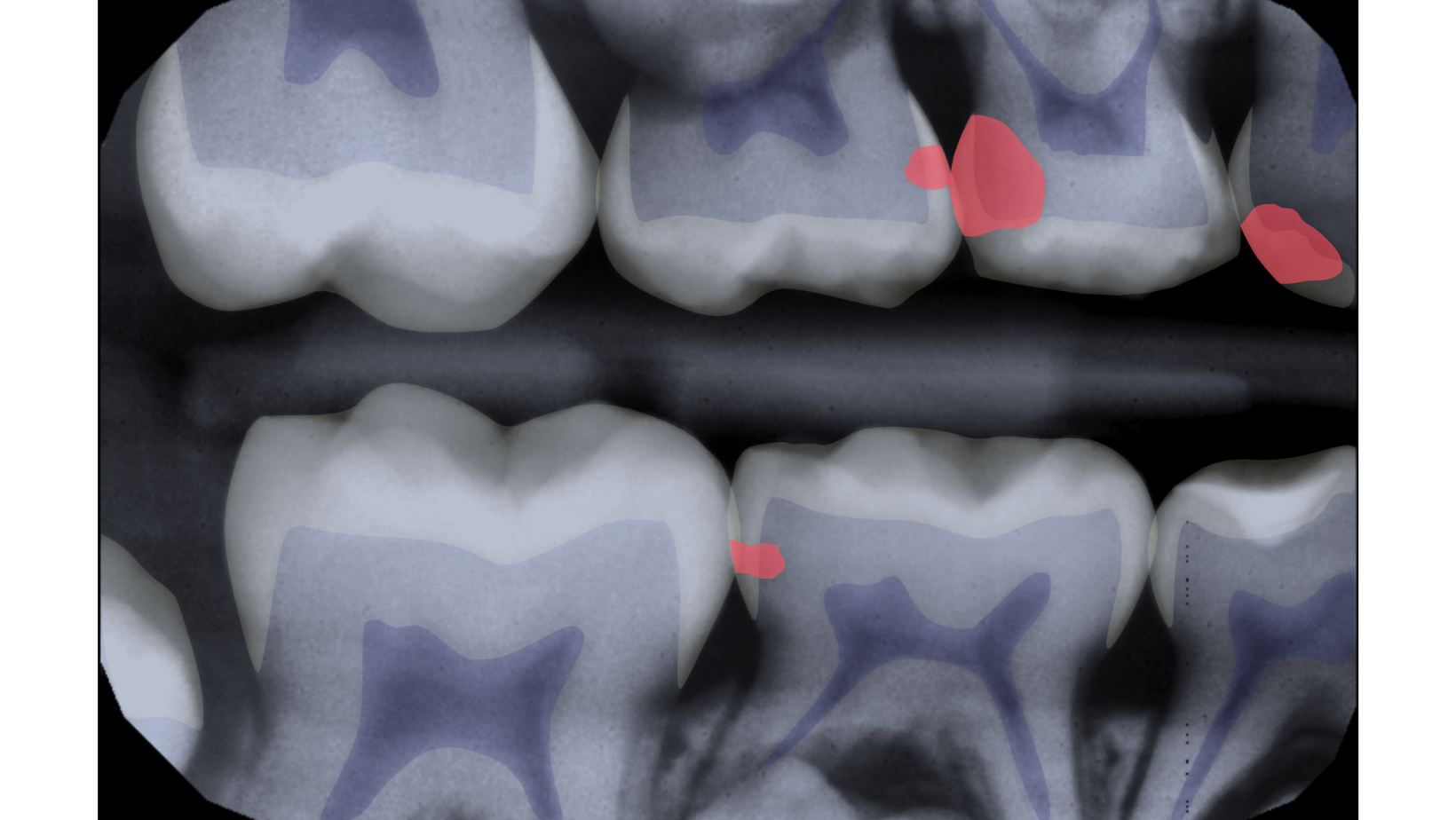
Videa's pediatric AI represents a groundbreaking solution to the challenges of occlusal caries in mixed dentition. Trained on an extensive dataset comprising 50 times more X-rays than a dentist sees in a lifetime, Videa Dental AI, the FDA clearance, exhibited an 80% improvement in true pediatric caries identification while achieving an overall clinically beneficial detection rate. This advancement ensures a clinically beneficial detection rate, addressing a critical gap in traditional diagnostic approaches.
What does this mean for dental providers treating pediatric patients? Envision a hectic day, fully booked, with a restless child in the dental chair. The dental team is racing against the clock before the child becomes unmanageable, potentially hindering the delivery of care. Having a second pair of eyes that draws a provider's attention can speed up the diagnostic process and instill a sense of security. Providers can be confident that, alongside their expertise, they are not overlooking lesions requiring treatment.
Solution: Dental AI to Drive Urgency
A consumer survey revealed that parents are willing to take whatever necessary steps to address their child's oral health. Armed with accurate AI-aided diagnostics, dental professionals can convey the treatment needed and the urgency of early treatment to parents, fostering better case acceptance.
As shown in this blog on patient education, visuals play a pivotal role in education. AI-highlighted shapes (colored in toothparts and potential concerns) ensure that the picture is not just worth a thousand words but is also tailored to the individual patient's needs. This customized approach establishes trust, urgency, and understanding, creating a solid foundation for effective communication.
What does this mean for dental providers treating pediatric patients? Choosing dental treatment can be overwhelming for guardians. Concerns about whether their child will experience pain, endure the procedure, or the potential cost often take precedence over understanding the treatments and why they are necessary. With dental AI, a provider can assist parents in visualizing tailored treatment needs and comprehending complexities that might have been overlooked without AI. This levels the playing field, ensuring that both the provider and the decision-maker are on the same page.
Solution: Catching Things Early with AI for Preventive Measures
AI not only identifies potential caries early but also facilitates preventive measures. Early detection allows for timely intervention, enabling dental professionals to implement preventative measures such as biomimetic materials for remineralization of the affected teeth. This proactive approach not only improves the child's oral health but also minimizes the need for invasive treatments.
What does this mean for providers treating pediatric patients? Together, the AI and the dental provider can more reliably detect caries than without the AI. This implies that lesions will be identified sooner and more consistently, enhancing the likelihood of minimally invasive treatments becoming viable. This, in turn, reduces the necessity for more extensive therapies on untouched adult teeth.
“Videa has been a very helpful asset for my pediatric patients. I prefer to review the radiographs and make my treatment plan first, and then I use Videa to confirm my findings. Videa also helps me clearly demonstrate to my patients and parents what I’m seeing as I’m reviewing my treatment recommendations with them. I feel like they have a greater understanding of their dental health and needs when they see the findings highlighted on the screen” - Dr. Kathleen Bradley, West 10th Dental
Final Thoughts
In conclusion, Videa for pediatric patients is changing children's oral dental care. This groundbreaking technology offers a comprehensive solution by addressing the prevalent issues of dental decay and diagnostic challenges in primary and mixed dentition. The impact on children's lives, both in terms of oral health and overall well-being, cannot be overstated.
Experience the future of pediatric dentistry with Videa. Schedule a demo today and witness firsthand the impact on your practice and, more importantly, on the lives of the children you care for.
Related blog posts
.png)
Nov 12, 2024
Harnessing AI for care standardization: the future of dental practice management
Dental Service Organizations (DSOs) and large group practices face the challenge of delivering consistent, high-quality care across numerous locations and providers. AI-driven care standardization offers a solution by aligning treatment approaches, reducing diagnostic variability, and enhancing early detection in critical areas like caries detection. Recent studies demonstrate how AI improves diagnostic accuracy, supports evidence-based care, and strengthens quality assurance, empowering DSOs to ensure uniform standards and improve patient outcomes. Videa’s AI solutions are at the forefront of this transformation, enabling dental organizations to deliver reliable, efficient care on a large scale.
.png)
Jun 3, 2025
Why top dental schools trust Videa to elevate education and care
Discover why leading dental schools trust Videa’s FDA-cleared AI to boost diagnostics, student training, and patient communication.
%2520copy.png)
Nov 24, 2025
3 Real-World outcomes from Videa: insights from leading DSOs
As dental AI adoption accelerates, DSOs are increasingly focused on understanding the real impact these technologies deliver inside their organizations. Recent insights from P1 Dental Partners and Gen4 Dental Partners highlight how AI is moving beyond small pilots and becoming an essential component of modern clinical and operational strategy. By deploying AI across their networks, these DSOs reported meaningful improvements in diagnostic clarity, treatment communication, case acceptance, and day-to-day workflow efficiency. Their experiences demonstrate how AI can support clinicians, strengthen patient trust, and create scalable systems that help multi-location organizations maintain quality and consistency as they grow.
Get started today
Schedule time with our team to learn more.